Making sure that your car’s tyres are properly inflated is vital for both safety and performance on the road. However, understanding tyre pressure measurements can sometimes feel like deciphering a foreign language. But you’ve no need to worry with our handy blog.
In this guide, we’ll break down the jargon by exploring common metrics like BAR, PSI, and kPa. Additionally, we’ll equip you with the knowledge to convert between these measurements seamlessly.
What is tyre pressure and how is it measured?
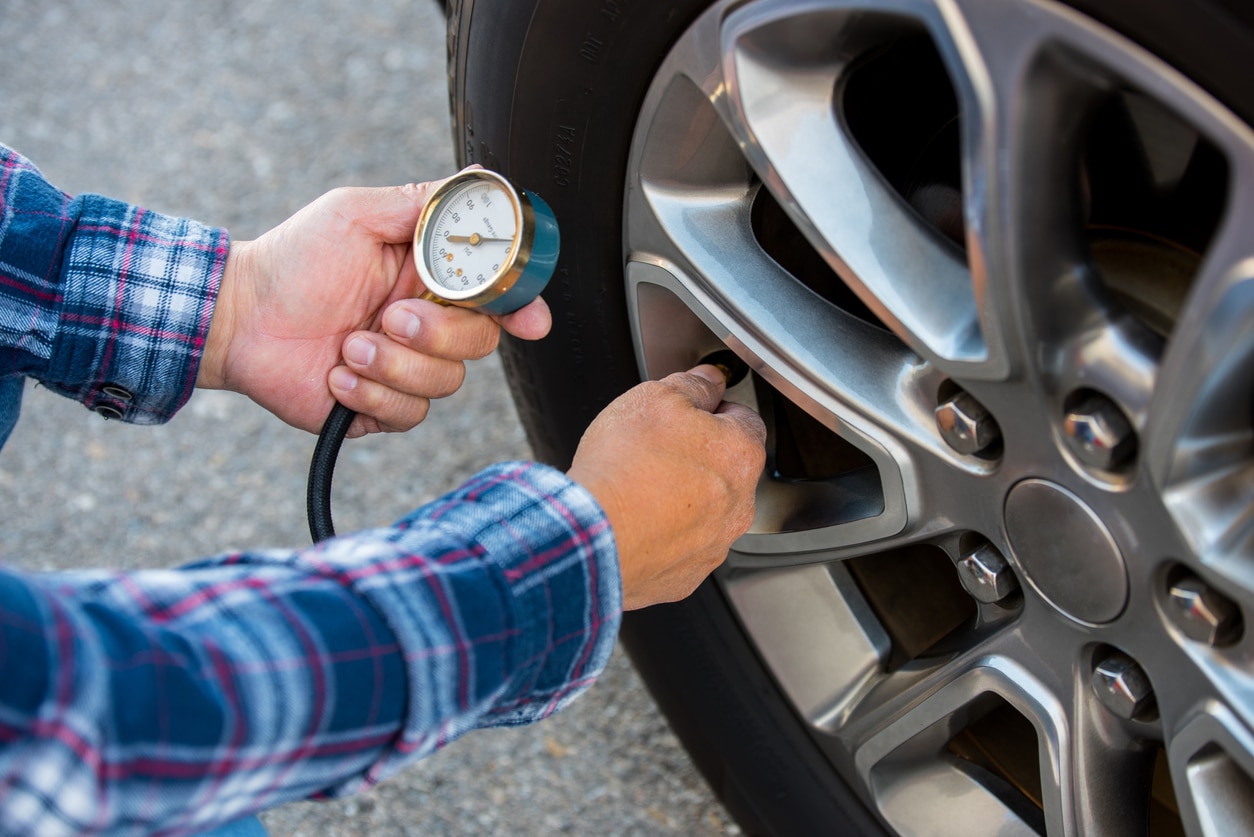
Tyre pressure refers to the amount of air inside a tyre, exerting force against its walls. Maintaining the correct tyre pressure is crucial for various reasons, including fuel efficiency, tyre longevity, and most importantly, safety. Now, let’s break down the three primary units used to measure tyre pressure:
PSI (pounds per square inch)
PSI is a standard unit of pressure measurement commonly used in the in the UK, USA and other countries adhering to the Imperial system. It represents the amount of force exerted by the air inside the tyre on each square inch of the tyre’s surface.
Bar (barometric pressure):
Bar is a metric unit of pressure measurement used all over the world. It measures the atmospheric pressure exerted by the weight of the air above us. In the context of tyre pressure, one bar is approximately equal to 14.5 PSI.
kPa (kilopascals):
kPa is another metric unit used to measure pressure, with one kilopascal equal to 0.145 PSI. It’s often utilised in countries that follow the metric system, such as Europe and Australia.
What is the correct tyre pressure for my car?
Determining the correct tyre pressure for your vehicle is essential for optimal performance and safety. You can typically find this information in your vehicle handbook or by checking the sticker located in the door sill or inside the fuel tank flap. Following the manufacturer’s recommended tyre pressure ensures proper handling, tyre wear, and fuel efficiency.
Tyre pressure conversion
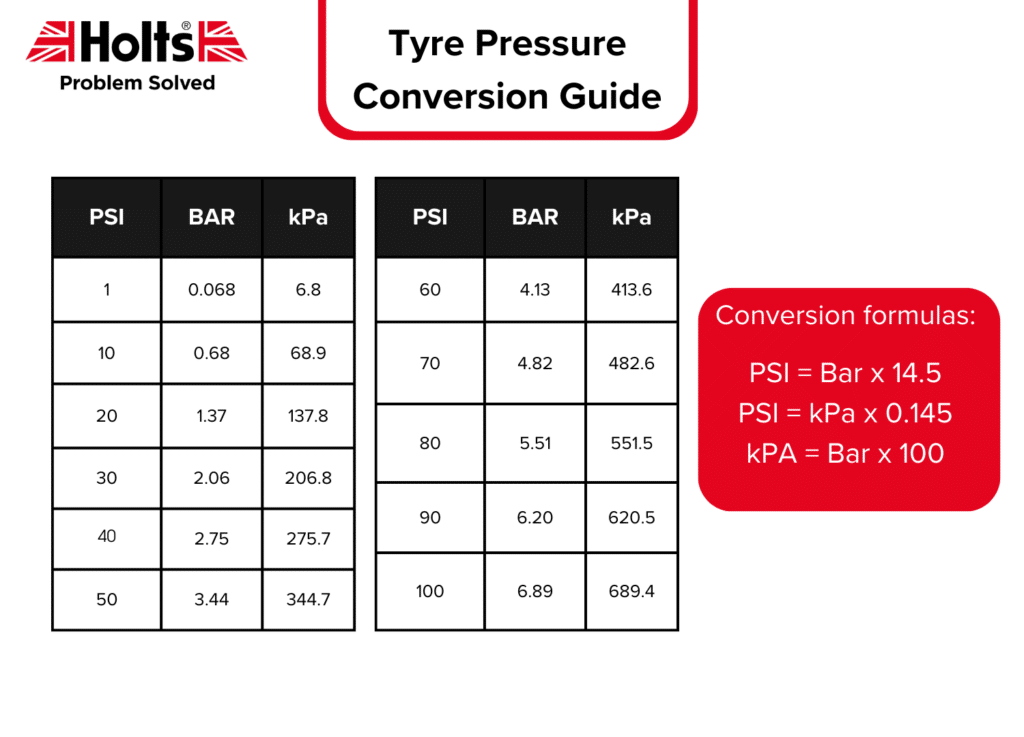
Now, let’s dive into the conversion process between BAR, PSI, and kPa. Converting between these measurements is relatively straightforward with the right formulas.
Bar to PSI
To convert from BAR to PSI, you can use the following equation:
PSI = Bar × 14.5
For example, if your tyre pressure is 2.5 BAR, the conversion to PSI would be:
PSI = 2.5 × 14.5 = 36.25 PSI
kPa to PSI Conversion:
Converting from KPA to PSI involves the following equation:
PSI = kPa × 0.145
For instance, if your tyre pressure reads 240 kPa, the conversion to PSI would be:
PSI = 240 × 0.145 = 34.8 PSI
Equipped with these conversion formulas, you can easily switch between BAR, PSI, and kPa to suit your preference or the specifications of your tyre gauge.
kPa to bar
Bar and kPa are both metric measurements for pressure. To convert them use the following simple equation:
KPA = Bar × 100
For instance, if your tyre pressure needs to be 260 kPa, the conversion would be:
BAR = 2.6 x 100 = 260 kPa
Understanding and maintaining the correct tyre pressure is a fundamental aspect of responsible car ownership. By familiarising yourself with measurements like BAR, PSI, and kPa, you can ensure your tyres are properly inflated for proper safety and performance.
Remember to consult your vehicle handbook or the relevant stickers for the recommended tyre pressure, and feel confident in converting between different pressure units as needed. Discover more helpful articles and advice like this over on our blog.