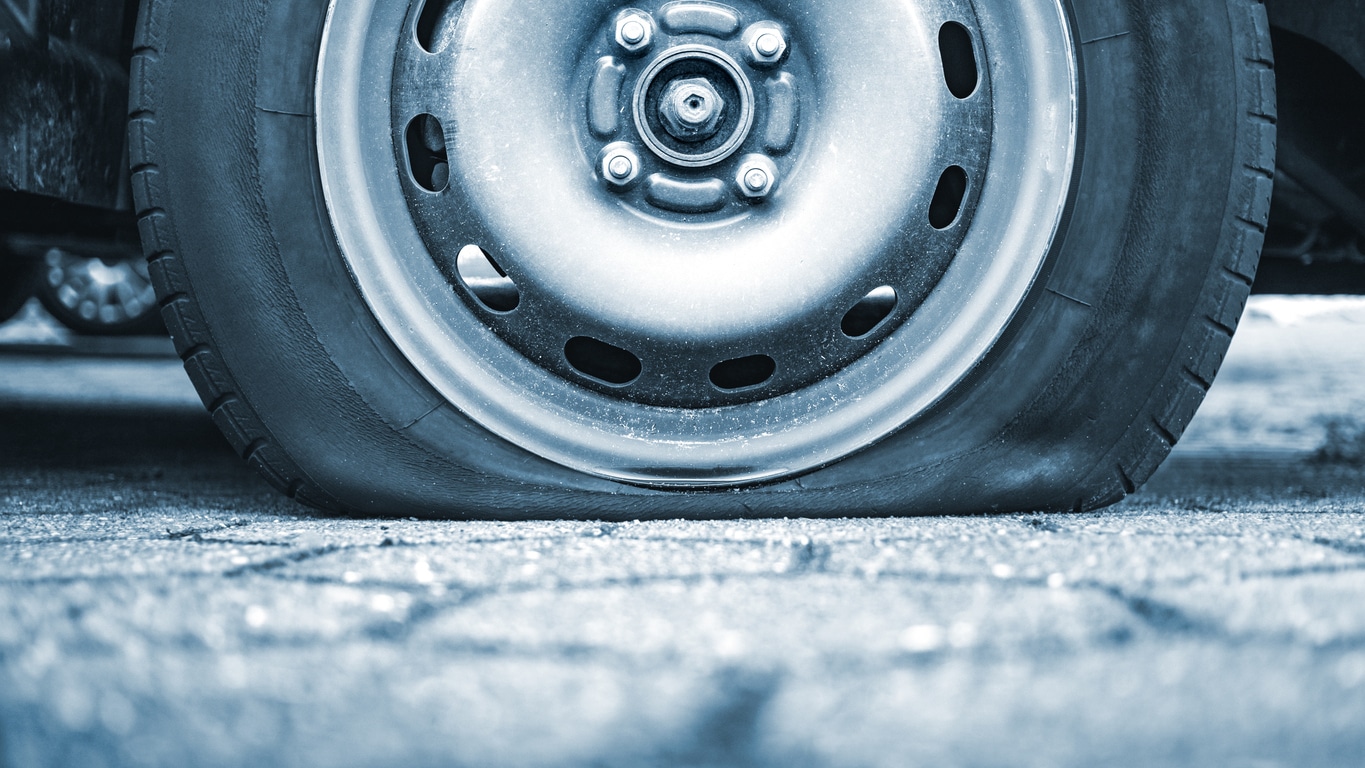
Tyres are one of the most important components on a car; after all, they’re what connect the car to the road, so it’s crucial that they’re kept in the best condition possible.
Over a tyre’s lifetime, it will be exposed to harsh conditions like extreme heat and friction during normal driving, but some things even the hardiest of tyres won’t withstand.
If your tyres do get damaged, what should you do: repair or replace them? Read on to find out…
Is it worth repairing a punctured tyre?
The thought of a tyre repair going wrong is enough to make some motorists consider whether it’s worth repairing a punctured tyre, so let’s take a look at some of the pros and cons.
When repairs are possible
Repairs to a tyre are possible under very specific circumstances to ensure that the structural integrity of the tyre remains intact and safe. If the puncture is to the main tread (not the side wall or shoulder) and is less than 5mm in diameter, then it should be repairable as long as there is no other damage.
Types of punctures that can typically be repaired
Common types of puncture caused by things like nails, screws, and other sharp objects usually cause damage to the central tread, so they’re generally repairable without having to replace the whole tyre.
However, depending on the location of the puncture and the size of it, it might not be possible.
Cost-effectiveness of repair
If a tyre can be repaired rather than replaced, it will save you a significant amount of money. A properly carried out professional repair can safely last for the remaining life of the tyre, provided the damage meets repair criteria.
It’s worth considering the long-term safety and reliability of a tyre when getting it fixed, not just which option is cheaper.

When should a tyre be replaced instead?
There are some instances where a tyre simply cannot be safely repaired. Let’s take a look at some examples of when a tyre must be replaced instead.
Age and wear
Older tyres should be inspected carefully, as age can weaken the rubber over time, even if the tread depth is still within legal limits. As well as this, age and wear can cause the rubber in a tyre to perish, making it less structurally sound and safe. In this instance, you should replace the tyre to avoid future problems.
Sidewall damage
If there’s a puncture or damage to the sidewall or shoulder, it’s bad news; it can’t be repaired and must be replaced. This is because these areas are crucial to maintaining the structural integrity of the tyre.
Large punctures
It probably goes without saying, but a large puncture – over 5mm – is irreparable. 5mm might not sound or look very big, but it’s enough to have caused significant damage to the structure of the tyre.
Safety concerns
Ultimately, the decision about whether to repair or replace your tyres comes down to safety. Driving a damaged tyre, even after a repair, can lead to blowouts or further damage, especially if the tyre’s integrity has been compromised.
Using Tyreweld as a temporary solution
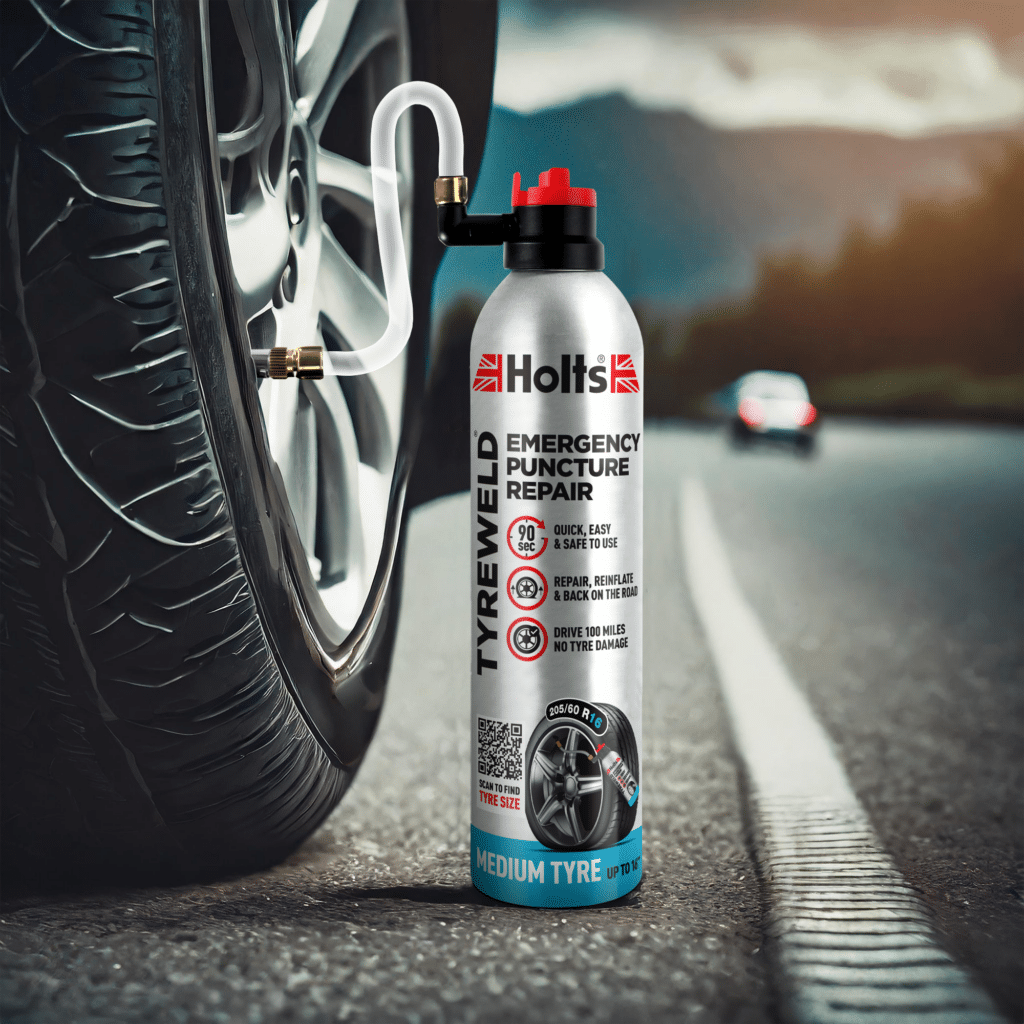
Tyreweld is a temporary solution developed by Holts that will keep you on the road long enough to have your tyre replaced. Let’s take a proper look at the part it plays in puncture repair.
How Tyreweld works
Tyreweld works by injecting a pressurised sealant and gas mixture that temporarily seals the puncture and reinflates the tyre. It quickly allows you to get back on the road so that you can get your tyre fixed. It should only be used for small punctures.
Can I drive with Tyreweld?
After you’ve put the Tyreweld into your car’s tyres, you should only drive it for up to 100 miles at reduced speed (always follow the product instructions). Tyreweld isn’t designed to be a permanent fix; it’s only supposed to get you to a garage to have your tyre assessed and repaired.
Why Tyreweld is not a permanent fix
Tyreweld doesn’t restore the tyre to its full strength; it simply fills in any damage temporarily. After you’ve used Tyreweld, head straight to a garage so that you can have your tyre professionally inspected and repaired or replaced.
When and how to use Tyreweld safely
For small punctures, Tyreweld is a great solution to get you back on the road quickly.
Before using Tyreweld, ensure that the car is on stable ground.
Then, simply attach Tyreweld’s nozzle to the valve of the punctured tyre, turn the nob to on and leave 90 seconds for Tyreweld to fill and reinflate the tyre. Remove the nozzle and check for leaks.
Remember, Tyreweld isn’t a permanent fix. You should drive no further than 100 miles on a tyre filled with Tyreweld. At the earliest possible time, have the tyre replaced.
What should you do after using Tyreweld?
Once you’ve used Tyreweld, there are a couple of things you must do to ensure the tyre’s safety.
Seek professional tyre repair or replacement
Tyreweld is a temporary solution, it isn’t a replacement for a professional repair or replacement. After using Tyreweld, drive to a garage as soon as possible, and drive no more than 100 miles on the tyre.
Checking for any damage after using Tyreweld
Before driving, inspect the tyre thoroughly to ensure the tyre is free of any leaks or damage. This is particularly important for long journeys or driving at high speeds.
If you want to make sure that you’re never stranded on the side of the road with a flat tyre, make sure that you always have a can of Tyreweld in your car for an emergency.
For more high-quality essential car maintenance products, take a look at the Holts product range.