Possibly the worst thing about a breakdown is that it usually happens when you least expect it. You could be driving down a dark country road one evening, and all of a sudden your engine starts to chug and you lose power. This could be the start of a nightmare, but with the right prep, the experience can be a relatively stress-free one.
Even with breakdown cover, you’ll still need an emergency kit in your car to make your breakdown as safe and comfortable as possible. Things like a Tyreweld to fix a flat tyre, a hi-vis vest, and a warning triangle are great places to start.
Let’s start packing!
Why you need a car emergency breakdown kit
An emergency breakdown kit is an essential addition to any vehicle. Whether it’s a flat tyre, exhaust leaks, or battery issues, if an emergency breakdown kit can’t fix the problem, it can certainly aid in making the stop a bit safer and more comfortable.
Having tools to fix common problems can get you back on the road quicker, getting you out of danger and back to the comfort of your home.
Essential car breakdown kit
So, we know how important a car breakdown kit is, but what does it need to include? Read on to find out what’s worth packing and what you can leave out.
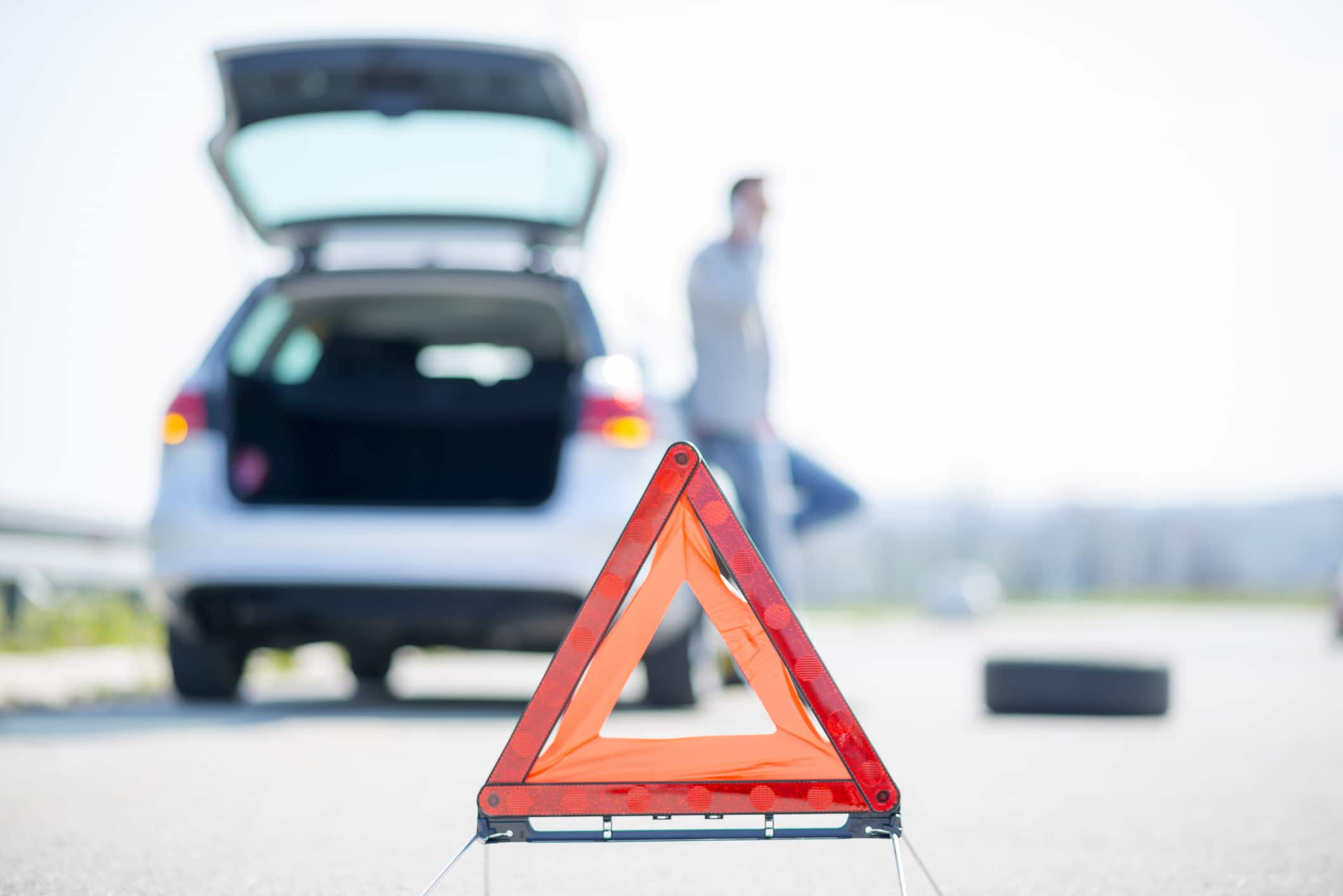
Warning triangle
A warning triangle is used during a breakdown to alert drivers that there is a stationary vehicle ahead. The triangle is placed at least 45 metres behind the vehicle, in clear sight of upcoming vehicles, but not directly in the road. NEVER use a warning triangle on a motorway.
If you plan to use your car on the continent, some countries list the warning triangle as a mandatory piece of equipment, so remember to pack one.
Hi-vis vest
Similarly to a warning triangle, a hi-vis vest helps other road users to see that there is a hazard ahead. In daylight, the bright colours of a hi-vis vest will catch the eye, and in the dark, the reflective strips ensure that you can be seen in the dark.
A hi-vis vest is an essential piece of safety equipment that greatly improves safety during a breakdown.
Jump leads
Dead car batteries are a common cause for breakdowns, but there’s an easy way to get yourself back on the road if you have the right equipment.
Connecting two car batteries using jump leads can quickly get you back on the road if your battery fails, and it doesn’t require a professional to do it; however, extra care should be taken when using them. Incorrect use can damage vehicle electronics and be unsafe (sparks, incorrect connection order).
It’s also worth noting that not all vehicles (especially hybrids/EVs) should be jump-started in the same way.
Before using jump leads, be sure to check your vehicle’s handbook to find the correct procedure.
Holts Tyreweld
Flat tyres are incredibly common, and if they strike at the wrong time, they can be a nightmare to solve, particularly when some modern cars don’t come with spare tyres.
Having a spare bottle of Tyreweld will quickly get you back on the road by filling the tyre with a sealant and compressed gas system that temporarily inflates the tyre. This isn’t a permanent fix, but it’ll get you back on the road typically up to around 100 miles at reduced speed (check product instructions).
Holts Bradex Easy Start
During cold mornings, engines can sometimes struggle to start in very cold conditions, leading to more wear on components. Holts Bradex Easy Start works by increasing the combustibility of the fuel/air mix when applied directly to the air intake.
During particularly cold mornings, this can be the difference between being stranded and being on the road.
The best part? It works for both petrol and diesel engines.
Personal safety emergency kit
We’ve listed items that will get you moving again, but what if the problem is more serious and you’re waiting for roadside assistance? Well, that’s where the personal safety emergency kit will pay dividends, day or night.
Portable phone charger or power bank
During a breakdown, you’re likely to use your phone a lot. Firstly, you’ll be making calls to your breakdown cover provider, texting family and friends to let them know where you are, or maybe you’re just scrolling through social media to pass the time. Whatever it is, you’ll definitely need to make sure that your phone is properly charged by keeping a portable power bank in your car. Having a solar-powered or high-capacity option will give you extra peace of mind.
Warm clothing or a blanket

If you break down in winter or during the night, it won’t take long before your car becomes incredibly cold. Keep things like a blanket or warm coat in your car, just in case you’re forced to brave the elements during a breakdown.
Snacks and bottled water
If there is a serious problem with your car, it can take hours before roadside assistance arrives, and even longer for a recovery vehicle to arrive if it’s needed. During this time, you’ll almost certainly become hungry and thirsty, which can affect stress levels and decision-making.
Be sure to keep things like snacks with a long shelf-life and bottled water in your car for times like this. Foodstuffs like granola bars, nuts, and beef jerky are all easy to store in your car and don’t easily spoil.
Torch with spare batteries
If a breakdown occurs during the night, there’s a good chance that you’ll need a light source to use the items included in your emergency kit. While your phone has a torch function, it’s not designed to illuminate long distances. Invest in a high-powered torch with some spare batteries. As well as helping you to use your emergency kit, it can also help you to flag down help.
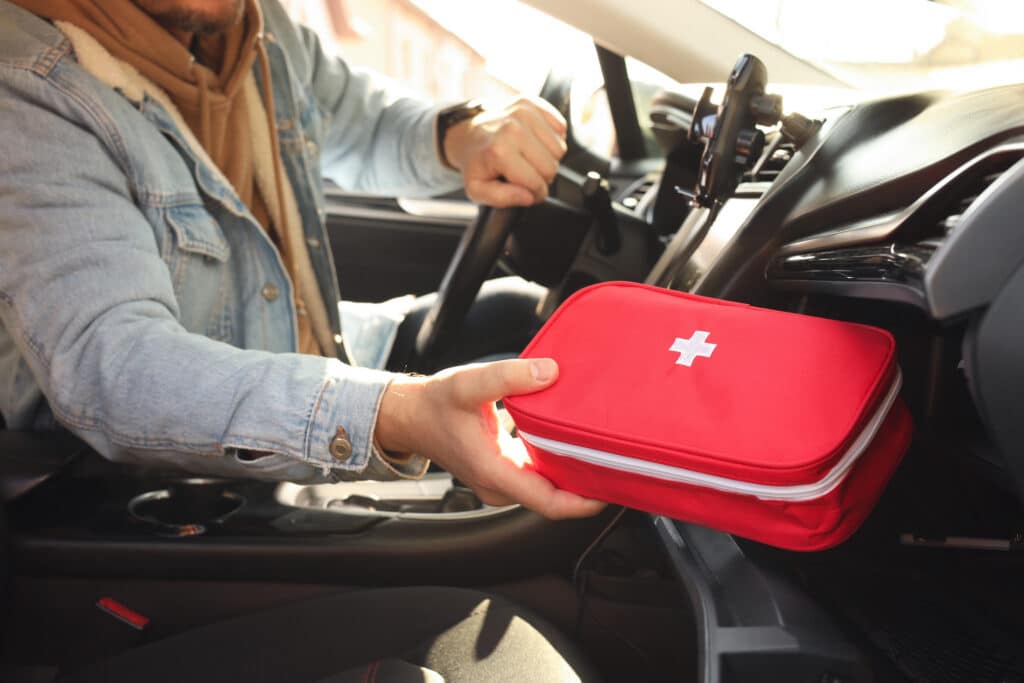
First aid kit and basic medical supplies
We hope you never have to use it, but having a first aid kit with basic medical supplies like plasters, antiseptic, and pain relief can be crucial in case of a small accident. It’s worth noting that these items will have an expiry date, so be sure to regularly check the dates so they’re still useful when you need them most.
Paper map or printed directions
While modern technology is great, it can fail. It might be a dead battery or no signal, but the brilliant thing about paper maps is that they don’t need either of those things to be useful in an emergency. Having an A-Z map in your car is a must-have.
Final tips for packing your breakdown kit
Now that you’ve got your emergency kit sorted, you’ve got to keep it updated and ready to use.
A durable, waterproof bag or box will ensure that the items don’t become unusable due to things like dampness.
So that your kit is ready to use when you need it most, be sure to check it twice a year. Set a reminder every 6 months on your phone so that your kit is in tip-top condition, and be sure to keep it easily accessible for quick use.
Hopefully, you’ll never have to use your emergency kit, but it’s better to prepare and never need it than to need it and not prepare.
To keep your car in peak condition, use high-quality products from Holts that can clean, repair, and restore your car to avoid breakdowns.