There’s no getting around the fact that cars of all kinds create greenhouse gas emissions. To combat this and keep pollution to a minimum, manufacturers have introduced several technological measures in recent years, one of which is the exhaust gas recirculation, or EGR, system.
But all too often, these essential engine components don’t get the attention they deserve, and a neglected EGR valve can easily lead to an unhappy engine and costly repairs.
Here, we’ll take a look at how an EGR valve works, and how to clean them and how you can spot the symptoms of a bad EGR valve.
What is an EGR valve?
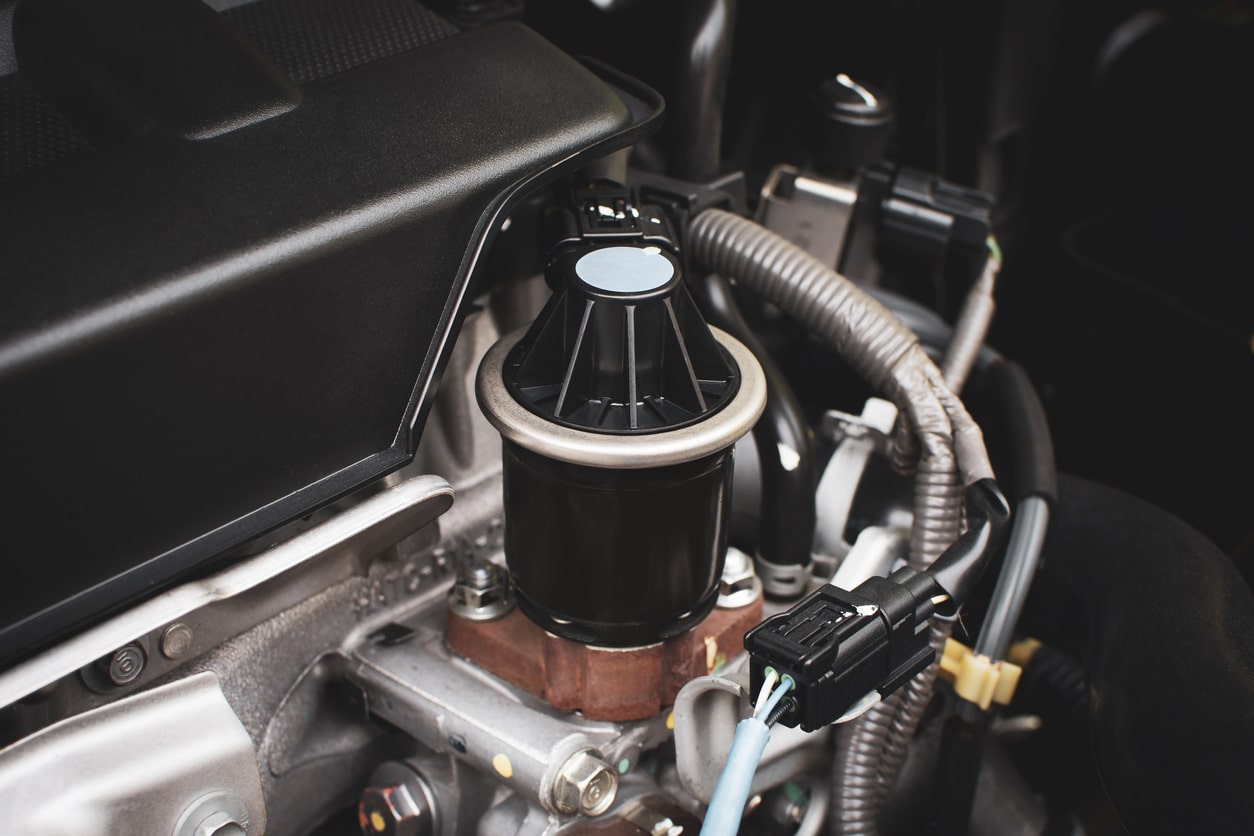
An EGR is a valve within a diesel or petrol engine that’s used to control the volume of nitrogen oxide (NOx) emissions released through the exhaust. NOx is among the most toxic emissions produced during the diesel combustion cycle, so it’s critical to reduce its occurrence in exhaust fumes by as great a margin as possible.
To achieve this, an EGR valve siphons a small quantity of exhaust gases and recirculates it back into the combustion chamber. This effectively lowers the combustion temperature of the fuel-air mix, reducing the production of NOx which happens at high temperatures.
Why do you need EGR valves to control nitrogen oxide levels?
Nitrogen oxide, alongside carbon monoxide, is among the most harmful pollutants emitted by diesel engines. It’s a by-product of the combustion cycle, produced when nitrogen and oxygen react at high temperatures.
NOx contributes to serious smog and pollution, with potentially catastrophic effects on human health and biodiversity. It’s also known to cling to and pollute agricultural crops, making them unsafe for human consumption.
Small wonder then, that EGR valves are a legal requirement on all diesel cars. Alongside DPFs, these devices can have a significant impact on the volume of toxic fumes released from an exhaust tailpipe, so it’s essential that they’re properly maintained and in good working order.
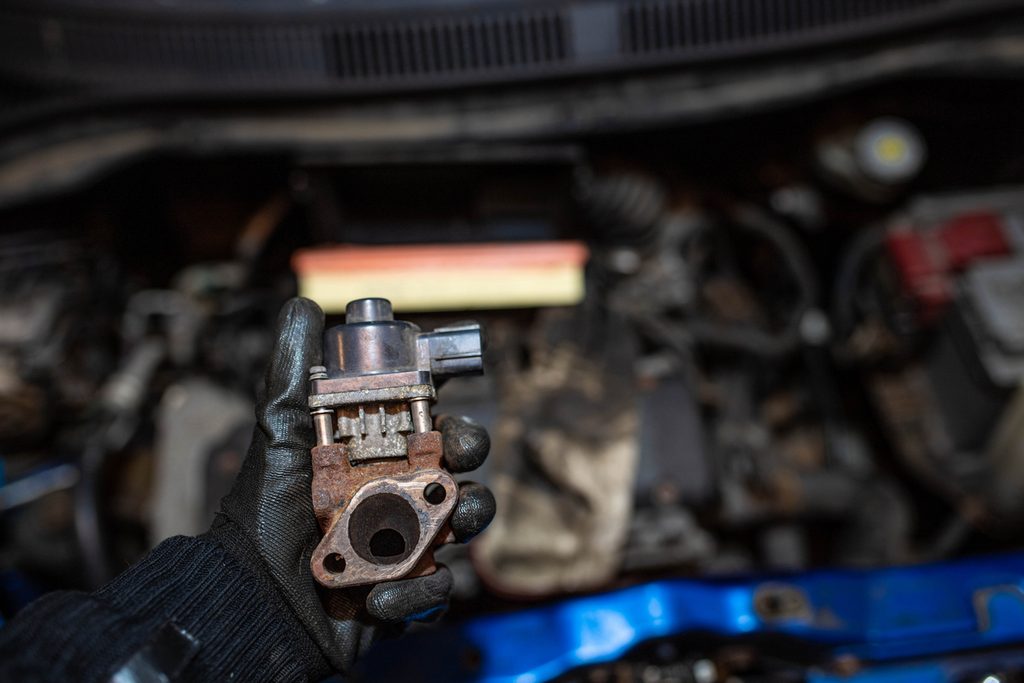
What are the symptoms of a bad EGR valve?
One of the downsides of EGR valves is that they’re prone to frequent problems, so much so that in the past diesel drivers sought to remove them.
EGR valve removal is now illegal under the Road Vehicles (Construction and Use) Regulations, since it stops a car from meeting the emissions standard (typically Euro 6 on modern diesels) it was built to comply with. It carries a hefty fine of up to £1,000 for cars.
That means diesel owners have had to learn to live with EGR-related problems and find ways to keep the valve working at its best.
If you’re concerned about your car’s EGR valve, here are some of the common symptoms that could indicate a fault:
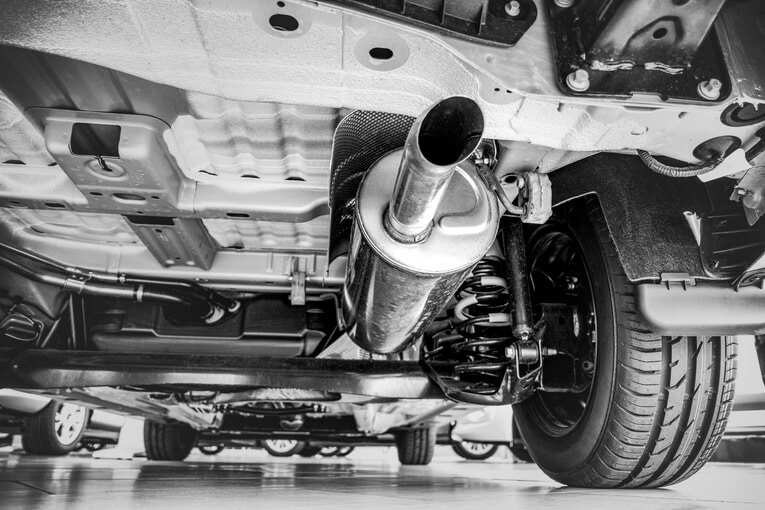
- Black smoke from the exhaust — if your EGR valve is stuck open or clogged with carbon so it can’t close, black smoke from the exhaust is a common symptom, caused by exhaust gas starving the engine of oxygen and preventing complete combustion. It’s also worth noting that a valve that’s stuck closed tends to show up as engine knocking and higher NOx emissions rather than smoke.
- Reduced engine performance and fuel economy – your car won’t function normally if the EGR valve is blocked or stuck, so this is a tell-tale sign of faults. Similarly, if your fuel economy dips unexpectedly, this indicates that something could be amiss.
- Dashboard warning light – much like when there’s a problem with your DPF, a warning light will illuminate on the dashboard when a fault is detected. Unlike the DPF however, there’s no dedicated light for the EGR valve; it may be represented by the “Engine Management” light or the “Check Engine” light.
- A strong smell of fuel in the car – since more hydrocarbons are present in exhaust fumes when the EGR isn’t functioning, you may notice a strong smell of fuel in the cabin. This could be hazardous to your health if it goes unchecked, so pull over to vent the car and decide on the best next step (ringing your breakdown provider or heading straight to a local garage).
- Rough idle and strong engine vibration: If an EGR valve is struggling to open and close in line with the engine timing, the effect can be felt as a rough idle or increased engine vibration.
- Ignition and performance problems: When emissions become too high as a result of a faulty EGR valve, the car may go into ‘limp’ mode, meaning a marked decrease in performance and significant engine starting issues.
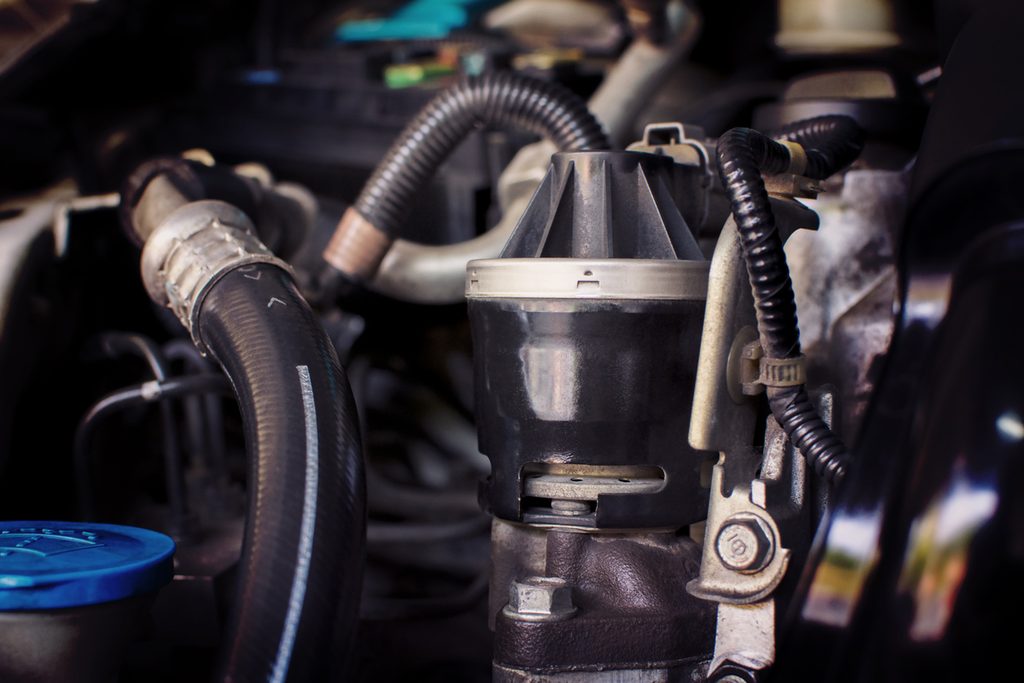
EGR valve cleaning: what you need to do
Ready to set about cleaning an EGR valve? Be warned that this job can be a little fiddly, so you’ll need to know your way around the engine before you start.
Here’s a list of what we’d recommend for the job:
- Safety gloves and glasses
- A thin wire brush or wire pipe cleaner
- A dedicated EGR cleaning solution
- Paper towel or a cloth
Step-by-step, the process for EGR valve cleaning looks like this:
- Start by removing the negative terminal from the battery to avoid electrical issues when working on the engine.
- Locate the EGR valve, which typically appears on the side of the engine in a relatively easy place to get to. If you can’t find it, refer to your car’s manual.
- Once you’ve located the EGR valve, take a picture or video of it and all surrounding components; this will make it easier to put hoses and connections back where they should be.
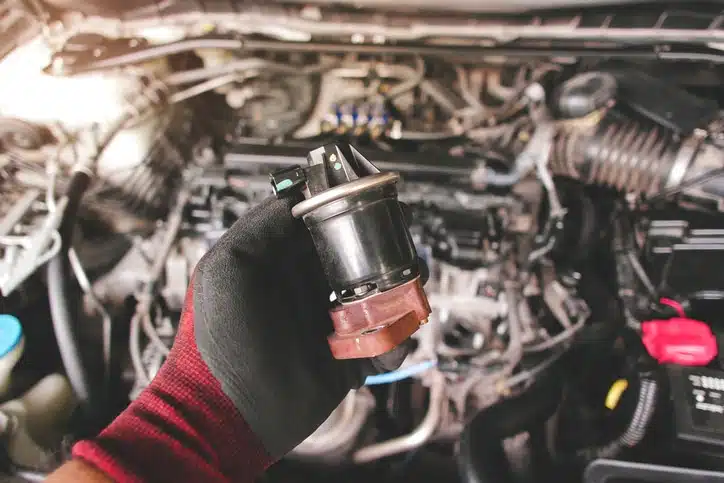
- Carefully remove the hoses, casing, and other components surrounding the EGR valve and lift it out of the engine. Be sure to wear gloves and safety glasses when doing this, as the valve may contain harmful dirt and particles that you wouldn’t want on your skin.
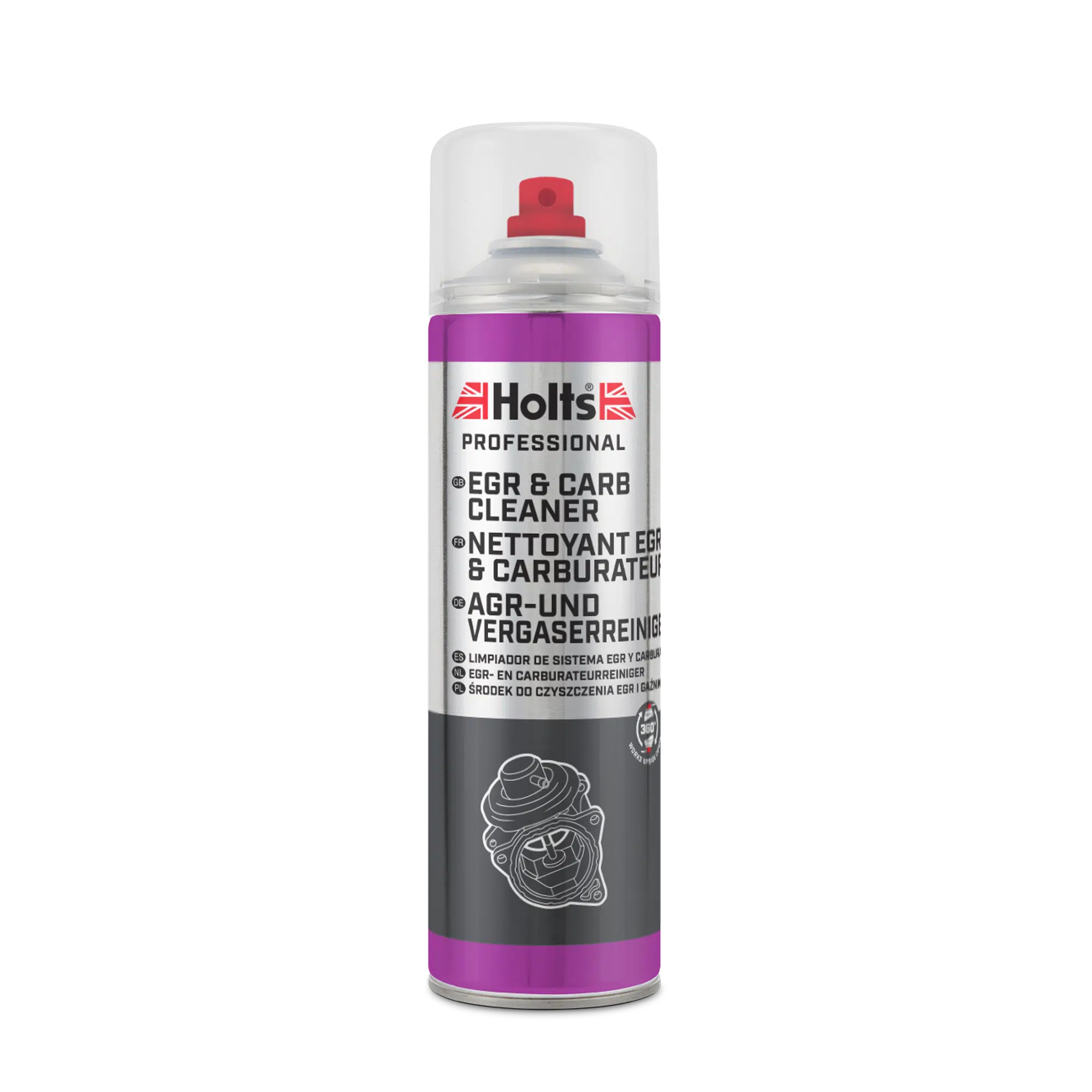
- Using a thin wire brush, remove as much loose dirt from the EGR valve as possible. Then, spray the component liberally with Holts Professional EGR & Carb Cleaner.
- After allowing the product to work for a couple of minutes, use the wire brush to clean the valve again; you should find that any remaining dirt lifts off with ease.
- Wipe the EGR valve down with a paper towel or dry cloth to remove any remaining residue. Then, carefully reinstall it, referring to photos and videos where necessary to ensure everything goes back where it should.
And there you have it, how to maintain an EGR valve in one handy step-by-step guide. For more car care tips, read the rest of our articles at the Holts blog here, then browse our entire range of products at the homepage.