Your brakes are arguably the most critical safety feature on your vehicle. When you press the pedal, you need absolute confidence that your car will stop exactly when and where you need it to. Keeping them well maintained is an absolute necessity for any driver. Cleaning is a huge part of this process.
Dirt, grime and grease build up relentlessly over time. If left unchecked, this accumulation heavily compromises the entire braking system. Cleaning and degreasing the various elements of your vehicle is crucial to keeping parts working properly for longer. This is particularly true when it comes to the braking system.
A thorough clean ensures mechanical components can move freely and grip securely. Too many drivers ignore their wheels until they hear a troubling noise or fail an MOT. By taking a proactive approach, you save money and protect yourself on the road.
3 reasons to clean your brakes
There are several reasons to make brake maintenance a regular part of your car care routine. The first and most obvious benefit is enhanced safety. Cleaner brakes simply ensure better stopping power in emergency situations. When the friction surfaces are free from oily residues and thick road dust, the pads can bite into the metal with maximum efficiency. You get a sharper, more responsive pedal feel every single time you brake.
Routine cleaning also helps to reduce premature wear across the entire system. Every time you drive, your car kicks up abrasive debris from the road surface. If this grit gets lodged in the callipers or scores the brake discs, it rapidly accelerates the wear of your expensive components. Taking the time to wash away this debris leads to a much longer lifespan for your braking hardware.
British roads are notoriously wet and heavily gritted during the winter months. This moisture and salt combination is highly corrosive to exposed metal. Removing this harmful mixture prevents lasting damage to expensive parts like brake callipers and rotors, as well as stopping rust in its tracks before it can seize a calliper piston.

Of course, it is worth noting that your personal driving behaviour will also play a massive role in the performance and wear of your brakes. Harsh, late braking will always degrade pads and discs faster than smooth, anticipated stops. Good driving habits combined with a clean system will yield the best results.
How to clean your brakes effectively
Knowing how to approach the job safely is essential. You might be wondering exactly how to use brake cleaner effectively without making a mess or damaging parts, but the process is straightforward if you follow a logical, step-by-step sequence.
Prepare the vehicle for maintenance
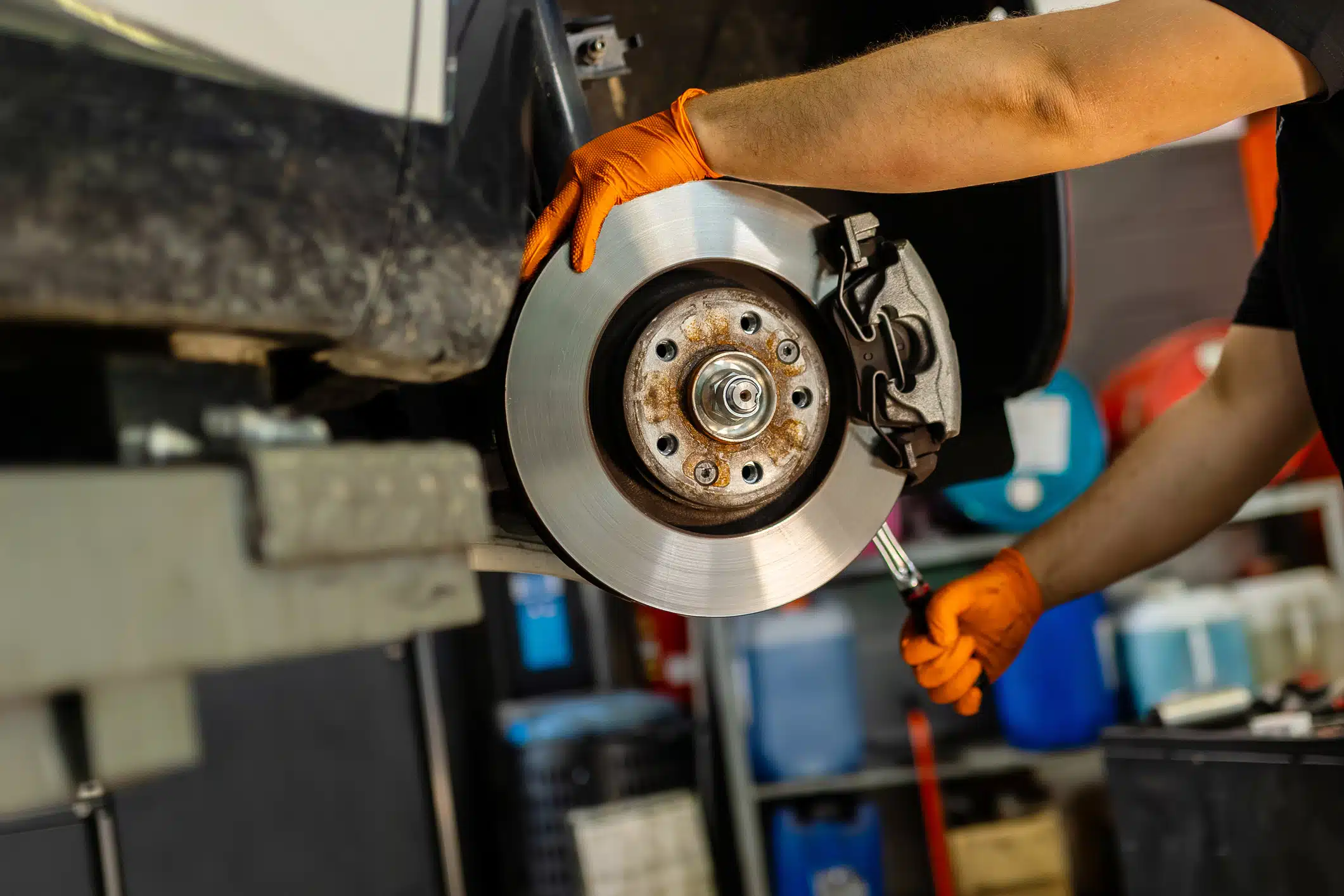
First, you need clear access to the components. It is much easier and more effective to jack the car up and completely remove the wheel before cleaning the brakes. Make sure the vehicle is securely supported on axle stands (never rely on just a hydraulic jack) on a flat, level surface before you begin any work.
Degrease the discs and callipers
Once the wheel is off, you will have a clear view of the whole brake assembly. Take your brake cleaner spray and apply it generously to the rotor surface and the callipers. The goal here is to wash away the loose dust and the greasy road film that heavily coats the metal. You will see the dark, dirty liquid run off immediately as the formula gets to work cutting through the grease. Place a drip tray underneath the hub to catch the runoff and keep your driveway clean.
Clear the critical friction points
Next, focus your attention on the critical contact points. You need to remove the stubborn dust and residue specifically where the brake pads make contact with the rotor. This is the exact area where stopping friction is generated, so it needs to be as clean as possible. Give these areas a second, targeted blast from the aerosol.
Remove stubborn residue with a wire brush
For the heavier, baked on grime, you will need to apply some physical effort. Scrub the calliper body and the stout metal mounting brackets vigorously. A stiff wire brush is usually recommended for this specific job, as it easily shifts stubborn brake dust and tough surface rust. But, be cautious here. Do not use the wire brush on the smooth friction surface of the brake disc itself, as you could score the metal and ruin the disc.
Final pad inspection and cleaning
The brake pads themselves take a little more care. You can give the metal backing plates a gentle clean, but this is also the perfect opportunity to check the friction material for wear. Inspect the thickness closely. If the pad is getting dangerously low, it might be time to fit a brand-new set.

For this entire process, we recommend using Holts Brake & Parts Cleaner. Our powerful, fast acting formula cuts through the toughest road grime with ease, and it evaporates quickly from the metal, leaving absolutely no oily residue behind. This means your brakes are ready for action almost instantly.
Taking the time to properly maintain your braking system pays off significantly in the long run. A simple, regular clean protects your financial investment in replacement parts and ensures your vehicle remains safe to drive in all weather conditions.
You do not need to be a fully qualified, professional mechanic to look after your own car; with the right specialist products and a bit of weekend care, you can keep your vehicle performing at its absolute best. Proper maintenance is the key to safe driving.