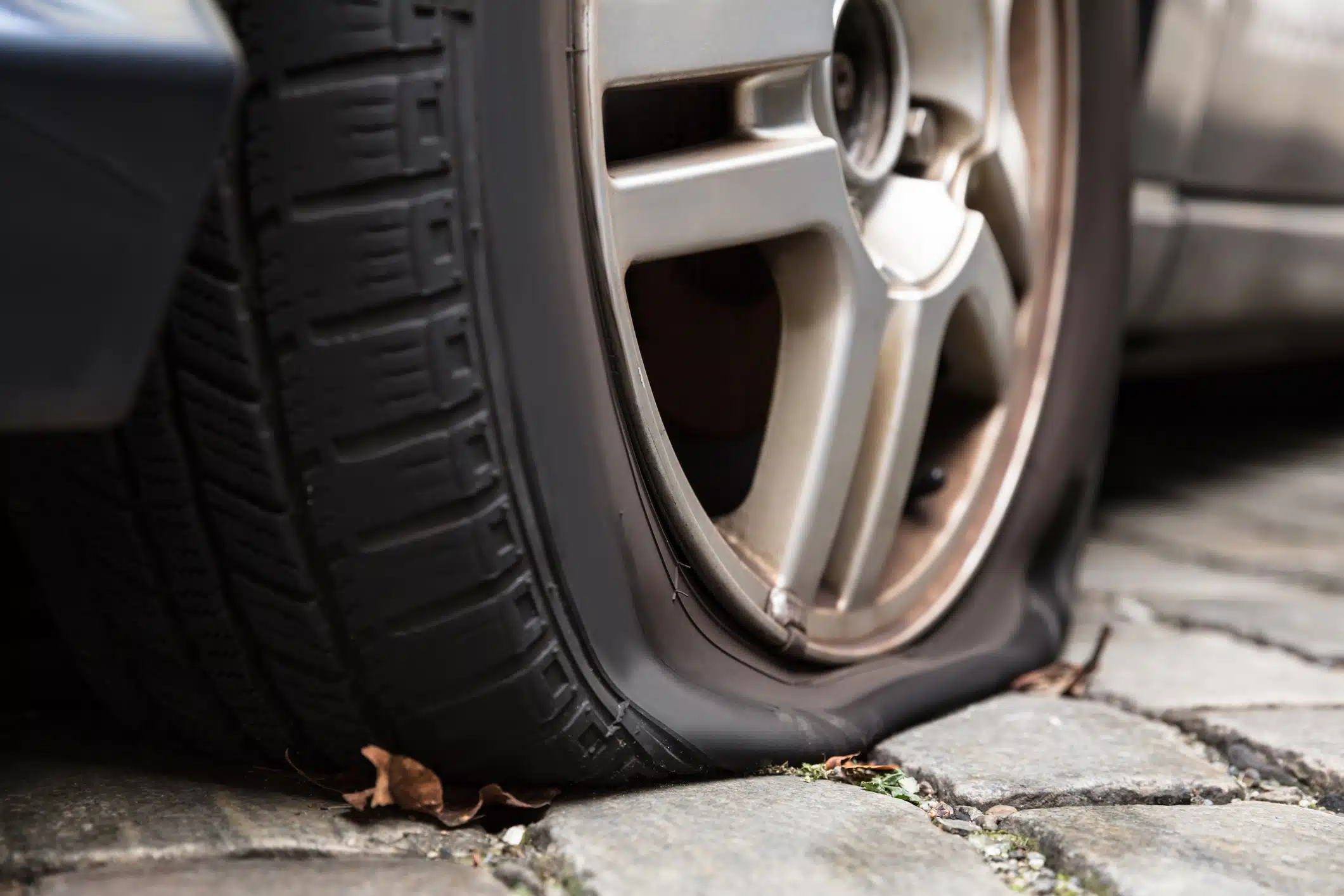
Punctures are a huge inconvenience to road users. While they’re usually not difficult to fix, they take time and cost money, particularly if roadside assistance is required. However, some punctures are avoidable by simply following a few tips.
In this blog, we’re going to detail a few key tips you can follow when driving to preserve the health of your tyres and keep you on the road longer.
Top causes of punctures
Punctures are one of the most common reasons for a vehicle breaking down, and that’s because there are so many factors that can directly or indirectly cause a punctured tyre.
Driving over rough surfaces
Rough surfaces on well-driven roads may contain excessive debris such as sharp stones, glass, nails, etc. Driving over them is a risk, particularly if it’s a regular route.
Hitting kerbs
Hitting a kerb, even at low speeds, can cause significant damage to your tyres, suspension, steering, and wheels. With enough force, a puncture can be caused by hitting a kerb.
Potholes
A pothole in the road will put significant pressure on a tyre; pressure that the tyre isn’t designed to handle. It’s best to avoid potholes if possible.

Incorrect tyre pressure
An underinflated tyre can cause a sharp object to pierce the rubber of the tyre instead of simply rolling over it. Overinflated tyres can also put you at higher risk of a puncture, as they are too rigid.
Carrying excessive weight
The more weight in the car, the more force is exerted onto the road. If a sharp object is on the road, that excess pressure can cause a puncture.
Worn or aged tyres
Older tyres can become more susceptible to punctures because of the natural degradation of rubber compounds. Ideally, tyres older than 5-6 years should be replaced, even if the tread wear is not significant.
How to avoid punctures
Before we give you our tips on how to avoid punctures, we want to start by saying that some punctures are simply unavoidable. You can be as cautious as possible, but sometimes debris or a pothole is unavoidable. Having said that, following these tips will significantly reduce your chances of puncturing your tyres.
Choosing the right tyres for your vehicle
The correct tyres for your vehicle make a massive difference to your chances of puncturing a tyre. Not only do your tyres need to be the correct size, but they should also be fit for purpose. For example, if you regularly drive off-road, driving with street tyres will probably cause more punctures; so, pick the off-road tyres.
Maintaining correct tyre pressure
The correct tyre pressure can help to reduce punctures by increasing the ability for the tyre to absorb impacts from debris and potholes.

Making sure wheels are aligned
Incorrect wheel alignment can cause uneven wear across the tyres, potentially meaning the tyres are weaker in certain parts. A tyre mechanic can align your wheels if you notice uneven wear or crooked steering when driving straight.
Driving vigilantly and looking out for debris
It might sound obvious, but it’s worth pointing out. If you can avoid hitting debris, you’ll have a better chance of avoiding punctures. Debris in the road, such as glass, nails, or even stones, should be avoided if safe to do so.
Avoiding sudden braking, rapid acceleration or aggressive corners
Sudden braking, rapid acceleration and aggressive cornering lead to early degradation of your tyres. This degradation can make it easier for debris to puncture tyres. By avoiding this, you can increase the life of your tyres.
Regularly inspecting tyres for issues
Some punctures can be prevented simply by inspecting tyres regularly. This will allow you to notice damage and wear before they cause issues like punctures. It’s important that tyres are not left to wear down completely, as this means they are more likely to be damaged. Replacing your tyres when you notice significant wear is important.
Get back on the road with Tyreweld
If you still get a puncture even with all the tips we’ve provided, you can get back on the road quickly with Tyreweld.
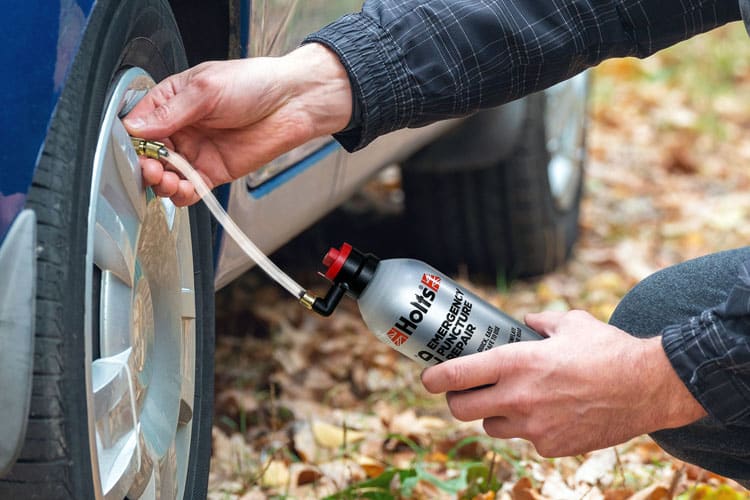
Tyreweld works by injecting a pressurised, water-based foam sealant into a punctured tyre through the valve stem, acting as an emergency, non-permanent repair. The foam both seals the puncture and reinflates the tyre simultaneously, with the foam circulating through the tyre as you drive in order to find and seal the puncture effectively.
Tyreweld is an emergency puncture kit that will get you back on the road to the nearest garage. What’s more, as Tyreweld is made from a water-based foam, it can be wiped from the tyre so that a professional can then fix the puncture permanently. After using Tyreweld, you can drive for up to 100 miles at a maximum speed of 50mph.
A puncture is sometimes unavoidable, but it’s important to remember that with the correct tips – and emergency kits – they don’t have to leave your car stranded on the side of the road. Holts has a wide range of products designed to get you back on the road, from tyre repair to starting aids, to ensure that your journey is completed safely.