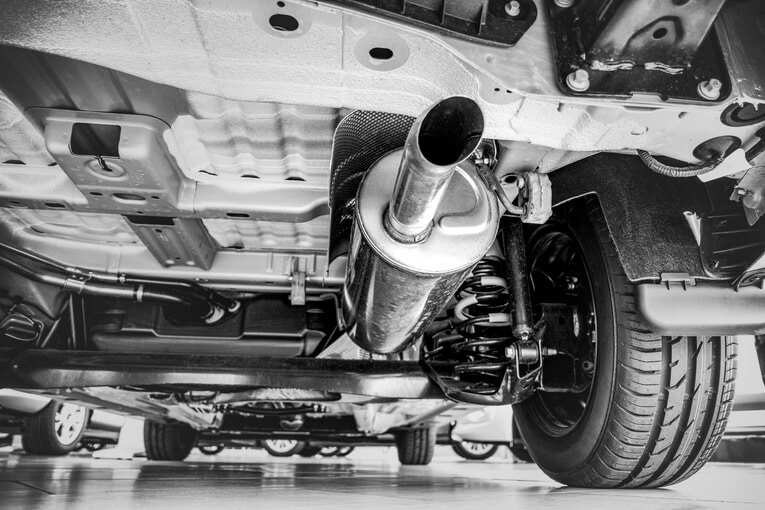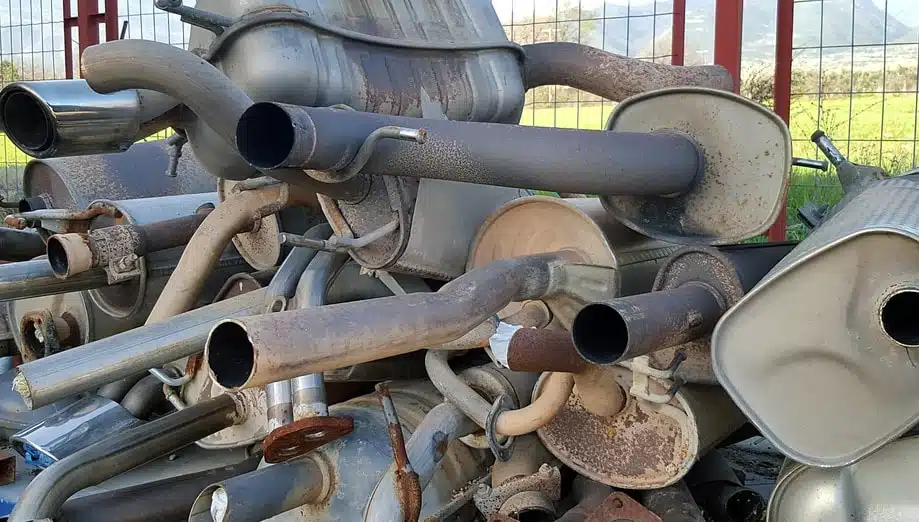
Because they sit underneath the vehicle and are exposed to moisture, salt and road debris, exhaust systems are particularly vulnerable to corrosion over time.
For most of us, exhausts are the easiest part of the car to ignore because we don’t see them every day when we’re driving to work or popping to the shop. Getting down on the floor to have a nosey at the exhaust isn’t something most drivers have time to do on a regular basis, and let’s face it, most of us have bigger things to worry about!
However, ignore your car’s exhaust for too long, and trouble will start brewing, potentially leading to some nasty repair bills and a failed MOT. Here, we look at some of the consequences of a faulty exhaust system, before giving you some tips on how to repair a broken exhaust pipe with Holts innovative exhaust repair product, Gun Gum.
Can you drive with a broken exhaust?
Driving with a broken exhaust is technically legal, but the vehicle must be roadworthy under the Road Traffic Act, and an excessively noisy or leaking exhaust may make the vehicle illegal to drive. Also, a damaged exhaust can allow harmful gases, including carbon monoxide, to escape.
Additionally, it’s a safety issue. If your exhaust is so damaged that it’s hanging off and scraping onto the floor, it might not be long before it’s fully detached, causing problems for the road user behind you.
The potential problems caused by a broken exhaust
We know that driving with a broken exhaust isn’t advisable, but what are the problems that a broken exhaust can cause? Let’s take a closer look with clear examples so that you can avoid them.

MOT failure
The most obvious (and annoying) problem of a broken exhaust is your car failing its MOT, and recent research shows that exhaust and emissions-related problems are a common reason for MOT failures.
For an exhaust system to be given the all-clear by MOT testers, it must be free from serious leaks and corrosion, be securely mounted, free from significant leaks, and keep vehicle noise within acceptable limits.
Common exhaust faults which can lead to MOT failure include advanced corrosion, particularly when a leak has developed; missing silencer baffles, which are used to reduce engine noise; and loose exhaust mounts, where the rubber fastenings are missing or shot.
The problem is that it can be very difficult to properly inspect the condition of your car’s exhaust in the driveway prior to a MOT test. That’s why it’s important to be aware of any unusual noises as you’re driving around, as this could mean your exhaust has a hole or leak you just can’t see.
Reduced fuel economy and higher emissions
Exhausts are designed to channel fumes away from the front of the car and reduce engine noise, whilst maintaining fuel efficiency. If your car’s exhaust has a leak, this will have an impact on the pressure in the exhaust system, reducing fuel economy and leading to higher emissions.
Vehicle exhaust gases contain several compounds, including carbon dioxide, nitrogen, water vapour and smaller amounts of pollutants such as carbon monoxide, nitrogen oxides and unburned hydrocarbons. The system is supposed to channel these fumes away and reduce the number of harmful particles emitted from the tailpipe, so your car can run more cleanly.
If a leak develops in the exhaust close to the engine, this can have a big impact on fuel economy and could lead to fuel wastage. So, while you might think that avoiding getting a leaky exhaust fixed is saving you money, in the long term, it could cost you more due to poor fuel economy.
General performance issues
You might not realise it, but your exhaust plays a major part in your car’s overall performance. An exhaust might not produce power by itself, but it contributes to a healthy engine by efficiently removing gases from the engine, allowing it to burn the air and fuel mixture more cleanly.
If your exhaust is broken and isn’t performing this task properly, it can quickly lead to a steep drop in performance. You’ll notice this drop in performance by experiencing sudden drops in power, poor acceleration, or rough idling.
Damage to other car parts
Over time, the fumes leaking from a cracked exhaust pipe will damage surrounding components and could even cause a fire. When they first come out of the engine, exhaust fumes are extremely hot, but cool gradually as they reach the tailpipe at the back of the vehicle. If there’s a hole in the exhaust close to the engine, these hot gases can leak out and blow straight at other components — causing heat damage and increasing the risk of fire.
The impact leaking exhaust fumes will have on other bits and bobs beneath the car will differ depending on where the hole is located on the exhaust system. The closer it is to the tailpipe, the smaller the impact will be on surrounding parts.
Noxious fumes can enter the cabin
One of the most serious consequences of a leaking exhaust system is the fact that poisonous gases could find their way into the cabin, which certainly isn’t good news for those travelling inside!
If noxious fumes like carbon monoxide seep up through the floor or enter through the air vents, they could cause illness or, in rare instances, even death for the driver and passengers.
The scary thing is that carbon monoxide is colourless and odourless, which is why exposure can be dangerous if exhaust gases enter the cabin. Mild exposure to exhaust fumes can cause headaches, dizziness and fatigue, which could prove dangerous when you’re at the wheel. And, in extreme circumstances, prolonged exposure to high levels of carbon monoxide can cause death, making it vital that exhaust repairs are dealt with quickly.
Increased repair bills
The simple fact is, if you don’t deal with a broken and leaky exhaust system quickly, it will end up costing you more to repair in the long term. Most small cracks and leaks can be plugged with a product like Gun Gum Paste before they get worse; however, if you leave it too long, it will grow to become an un-repairable hole, leaving you with no choice but to have the part replaced — and setting you back much more than you bargained for!
Potential trouble with the law
As we’ve explained, a broken exhaust in and of itself isn’t illegal, but it can lead to sanctions from the police if they believe it to be causing a danger to other road users.
A small crack or hole in your exhaust is unlikely to be noticed by the police unless it’s causing excessive noise, but if the exhaust is hanging off or dragging on the floor, you might end up seeing blue flashing lights in your rear-view mirror.
Tips for using Holts Gun Gum
Exhaust repairs can be incredibly expensive, so before giving your mechanic a call, it’s worth checking whether the repair can be carried out at home using Holts Gun Gum.
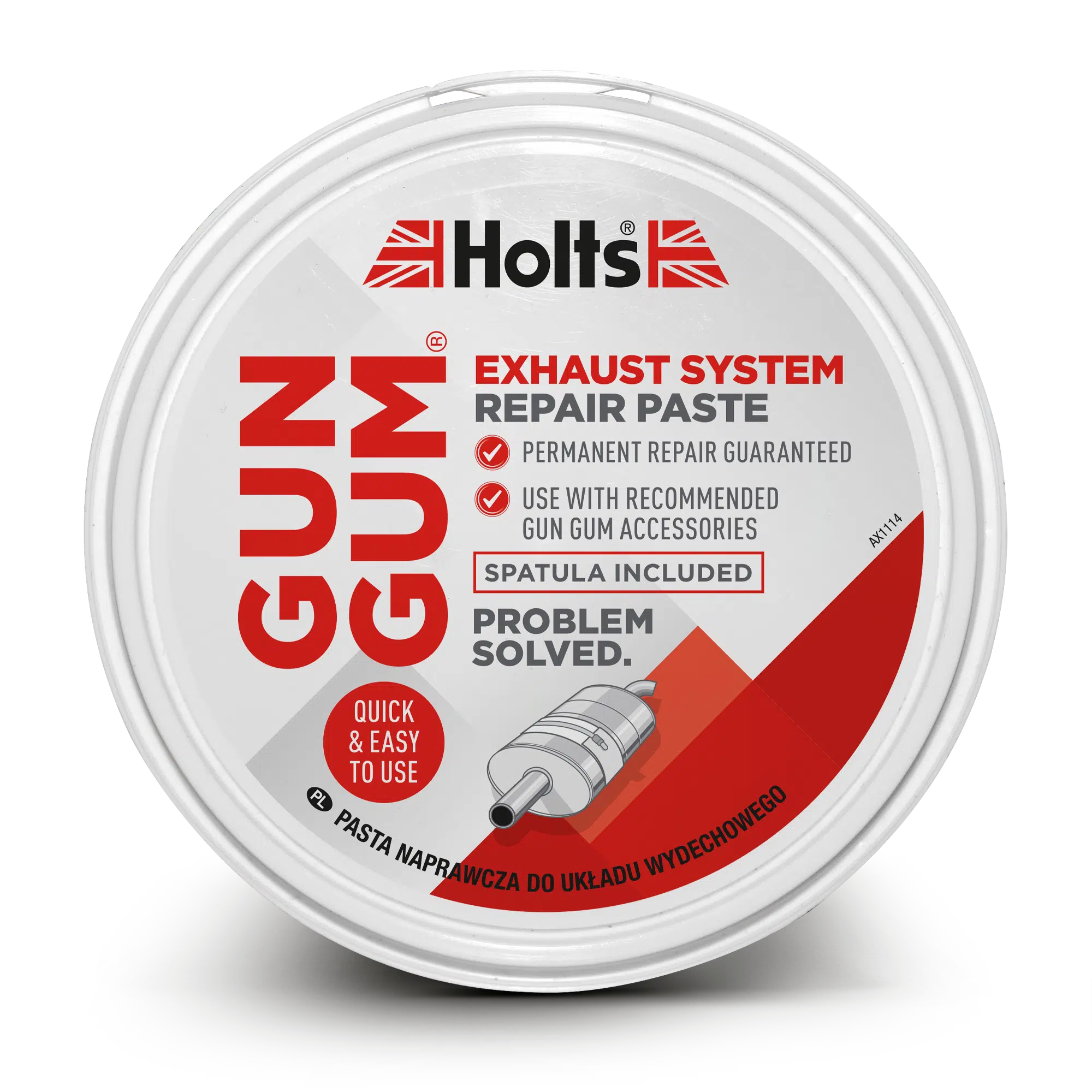
Holts Gun Gum is a DIY exhaust repair system which can be used to seal holes and cracks in a faulty exhaust system. The paste can be used with the right bandage to mend small cracks, holes and leaks in the exhaust to create an airtight seal, and because the results are permanent, you can be sure your car’s exhaust is working as it should.

Gun Gum Paste can be applied simply with either your fingers (be sure to wear protective gloves) or a spatula, and dries hard either overnight or more quickly if you run the engine to heat the exhaust — creating an effective airtight seal that lasts.
If you’re thinking of using Holts Gun Gum for the first time to repair your car exhaust, here are a few essential tips to guarantee great results:
Ensure you clean the area first
Removing dirt, loose debris and rust from the area directly around the crack or hole is essential to make sure the seal is airtight. If you don’t clean the area first, the product may not stick to the surface as it should.
Use with Holts Gun Gum accessories
For the best results when using Gun Gum, use the product with our range of wraps and bandages which are specially designed for sealing exhausts. These products are particularly useful for sealing cracks and holes on awkward areas of the exhaust system, such as bends and joins.
Only use after the catalytic converter
If the leak is located before the catalytic converter, Holts Gun Gum may not be as effective, because areas like the manifold simply get too hot. We’d only recommend using Gun Gum to seal cracks after the catalytic converter, because temperatures are slightly lower further down the exhaust system.
Use Firegum to seal leaks around exhaust assembly
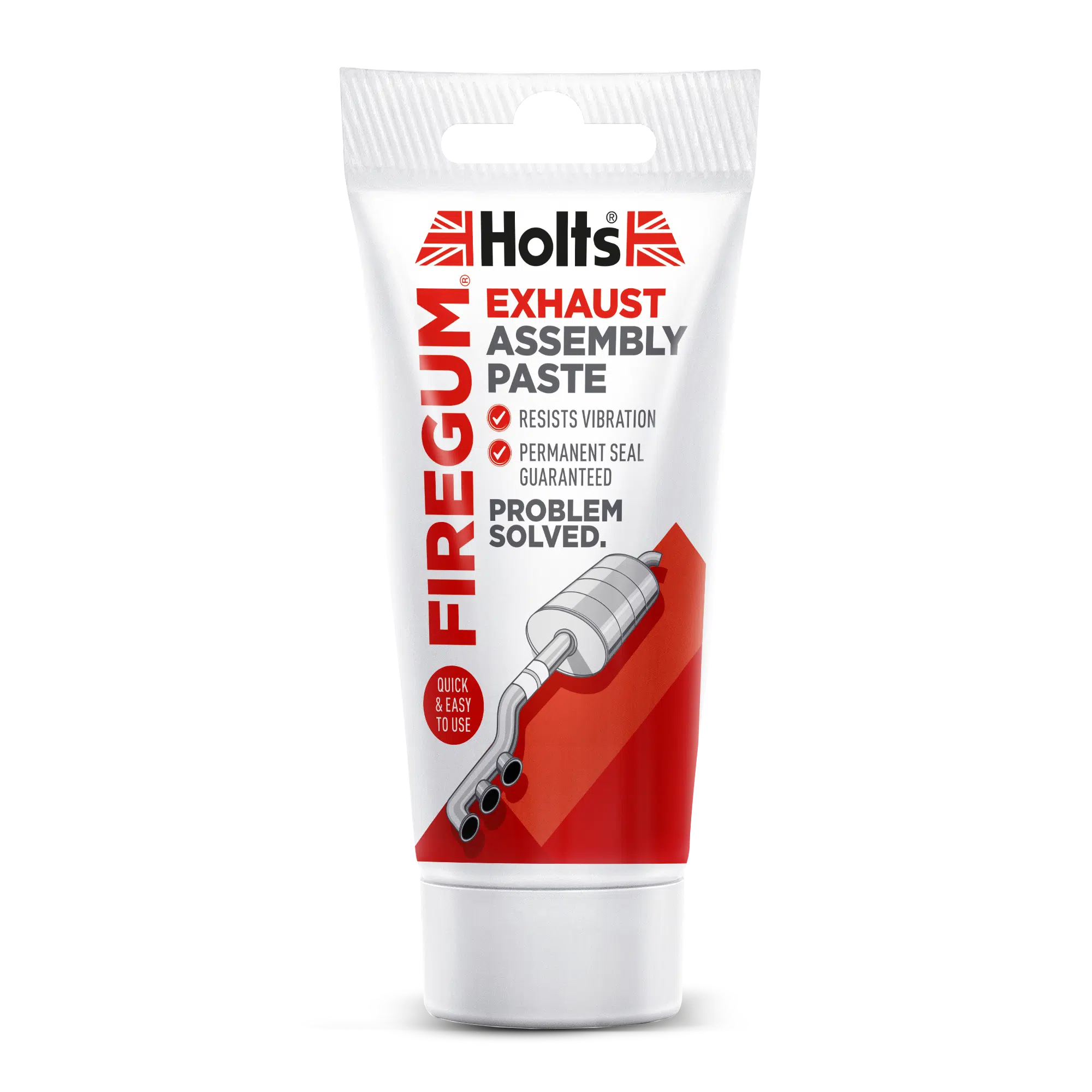
Holts Firegum can be used to seal leaks around the exhaust assembly where there is a poor fit or gaskets have failed.
For more information on Gun Gum, as well as our other innovative DIY car care products, visit our product page.